
Spanish Nationalist (1939)
Fighter: Number operated 12
The Spanish Civil War, fought between 1936 and 1939, saw the use and testing of various new and modern military weapons, including the newest models of combat aircraft. Both the Nationalists and the Republicans employed different types of planes, supplied by their allies, to build up their arsenals and demonstrate these new weapons to foreign observers. The Nationalists, in particular, were heavily supported by Germany and Italy. As a result, the Spanish Nationalist Air Force utilized numerous fighter designs from their military patrons, including the Fiat G.50, which entered service near the end of the war in January 1939.
The Spanish Civil War
During the 1930s, Spain was plunged into a severe political and economic crisis after the military attempted a coup d’etat against the newly elected Republican government. The nation was deeply divided, with the leftist Republican bloc receiving support from communists and anarchists. These groups sought to radically change the political and economic system, which was largely controlled by the church and aristocracy. Opposing them were the Nationalists, determined to preserve the old order.
Launched in July 1936, the coup ultimately failed to secure key city centers in Spain, leading to an open civil war between the Nationalists and Republicans. This conflict would last for three bloody years. In many ways, the Spanish Civil War was a precursor to the Second World War, as foreign powers like Germany, Italy, and the Soviet Union became involved, supplying weapons, resources, and military advisors. New equipment was tested in combat and the results were being carefully observed.
The de facto leader of the Nationalist side was Francisco Franco, who managed to gather a substantial force of experienced soldiers under his command, stationed in North Africa. However, as the Republicans controlled the Spanish navy, Franco could not safely transport his troops back to Spain. This forced him to seek foreign assistance. He turned to Germany and Italy, both of which decided to provide aid. For example, the Germans supplied a group of three-engine Ju 52 aircraft that helped transport many of Franco’s men to Spain.
On the other side, the Republicans received aid from the Soviet Union, particularly in the form of modern tanks and aircraft. Once again, Franco sought assistance from his allies, and they agreed to support him. Over the next three years of fighting, various aircraft designs from across Europe were used in combat. While the majority of fighters were older biplane models, more modern, low-wing fighters made their combat debut in Spain, including the Fiat G.50.
The Fiat G.50
In the years leading up to the outbreak of war in Spain, the Italian Air Force began the slow process of replacing its older biplanes with more modern low-wing monoplane fighters. In April 1935, engineer Giuseppe Gabrielli started work on a new low-wing, all-metal aircraft, which was designated the G.50. On 28th September 1935, Gabrielli submitted his design to the Ministry of Aviation. The military officials were impressed by his work and authorized him to continue development. Due to Fiat’s production facilities being overburdened, the project was transferred to the Costruzioni Meccaniche Aeronautiche (CMASA) facility at Marina di Pisa, which had been part of Fiat since 1931. By 1936, Gabrielli had completed the final drawings and compiled the necessary list of materials and equipment.
The prototype was completed in early 1937 and transported to Turin for further testing. Its first test flight took place on 26th February 1937. Despite its modern appearance, the overall performance was less satisfactory than its competitor, the Macchi C.200. Additionally, a flight accident during the prototype stage nearly led to the G.50’s cancellation. However, for various reasons, including the reluctance to abandon the already-built tooling and equipment, the Italian Air Force issued a small production order for 45 aircraft of this type.
Production began in late 1938, and the first G.50s were assigned to an experimental military fighter unit for further testing and training. This unit was based at the Ciampino airfield near Rome and was named Gruppo Sperimentale da Caccia (Experimental Fighter Group). Command of the unit was given to Major Mario Bonzano, a renowned ace pilot from the Spanish Civil War, where he flew the CR.32 biplane. Pilot training on the new aircraft lasted until January 1939, at which point a decision was made to send a group of 12 G.50 fighters to Spain for evaluation and further testing. By then, the Civil War was in its closing days.
In Spain
The experimental group arrived in Spain by air in either January or February 1939, depending on the source. They were stationed at Escalona Airport, near Madrid, and were integrated into the XIII Gruppo Caccia. Possibly due to poor weather, their first operational combat missions did not take place until March 1939. These missions were primarily bomber escorts conducted at altitudes above 7.5 kilometers. By this time, the opposing air force had been almost entirely destroyed.
It appears that the G.50 aircraft saw no air-to-air combat during the war, and none of the 12 planes were lost in combat. However, one aircraft was eventually written off, likely due to an accident. Although the group saw little active service, the planes were used in parades and served as propaganda tools. In the interests of the Italians, they would also be used to demonstrate the use of their new aircraft in field conditions.

Camouflage And Marking
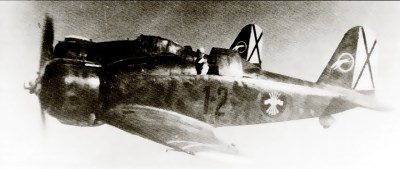
The G.50 was painted with Italian-origin camouflage, featuring a blend of green, brown, and sand tones. In Spain, it received Nationalist markings, including a black circle painted on the fuselage sides with a large white stripe. A black St. Andrew’s cross was also added on the rudder over a white background. Some aircraft were marked with the so-called ‘Ace of Clubs’ emblem on the fuselage. Finally, the aircraft were designated with the number 1 followed by an individual number (from 1 to 12).

Experience Gained
Following the compilation of the G.50’s brief participation in the Spanish Civil War, Major Bonzano issued a report detailing its overall flight performance. It was deemed an adequate fighter with good handling characteristics, particularly in terms of maneuverability at high altitudes and while taxiing in crosswinds. The armament, consisting of two heavy machine guns, was considered sufficient. The Italians preferred not to use cannons, believing that a machine gun’s higher rate of fire was more advantageous than the heavier, but slower-firing cannons. Given the need for rapid fire to bring down enemy aircraft, it was recommended that the ammunition load for each machine gun be around 700 to 800 rounds.
However, there were some downsides, including poor visibility and structural issues with the landing gear. The visibility problem could be partly attributed to the fact that Major Bonzano and many other Italian pilots were accustomed to flying older biplanes, which had open cockpits, unlike the newer low-wing fighters with enclosed cockpits. This was a similar complaint voiced by German pilots when they transitioned to flying the Me 109.
The experience gained from Italy’s first monoplane fighter was limited and inconclusive overall. However, it clearly demonstrated the potential of monoplane designs for future aircraft. Back in Italy, the fate of the Fiat G.50 was still uncertain. Although the Macchi C.200 was considered a superior design, it would take several months before it could enter mass production. As a temporary solution, the production of the G.50 was approved. Between 1938 and 1943, approximately 774 to 791 units of all G.50 variants were produced. The G.50 saw service in various theaters across the Mediterranean, but it was soon rendered obsolete when it encountered more modern enemy fighters.
In Spanish Service
Following the end of the Spanish Civil War, the eleven surviving aircraft were allocated to Franco’s Nationalist regime. These planes were assigned to the 27th Gruppo Caza (Fighter Group) after June 1939. At that time, the Italians sent one additional aircraft to replace one that had been lost. The planes were stationed at Nador, near Melilla in Morocco, and remained there until 1943, when they were removed from service due to obsolescence and a lack of spare parts. By the end of the war, Franco’s government had acquired hundreds of new aircraft of various makes and models. In the years following, they would consolidate around the German Me 109G as their premier fighter aircraft, acquiring a license to build the airframe domestically and would employ them into the 1960s. The G.50s were primarily used as training aircraft by the Spanish Air Force, to transition pilots from trainers and older models.
In Spanish service, the G.50 retained its original Italian camouflage. The Spanish added a Falangist insignia, which was initially painted white but later changed to red, on a black circle located on the fuselage sides.

Technical characteristics
The G.50 was a single-seat, low-wing, all-metal fighter plane. The fuselage was made from four angular longerons. The wing construction was conventional and consisted of a center section, which was made of a steel tube connected to the lower fuselage, and two spars connected with ribs. The fuselage, wing, and tail were covered with duralumin sheets. The only fabric-covered parts of the aircraft were the movable control surfaces in the wings and the tail. The G.50 was powered by the 840 hp (626 kW) Fiat A 74 RC 38, a 14-cylinder radial piston engine, which drove an all-metal three-blade propeller produced by Fiat.
The G.50 was equipped, like most modern aircraft of the time, with inward-retracting landing gear, but the rear tail wheel was fixed. In later improved versions, the rear tail wheel was changed to a retractable type as well.
The armament consisted of two forward-firing 12.7mm Breda-SAFAT heavy machine guns, with 150 rounds of ammunition for each gun. The guns were placed behind the upper engine cowl and were synchronized in order not to damage the propeller.
In Spain, the G.50 did not receive any major changes. The only visual difference from the later procured aircraft was the lack of landing gear doors. To compensate for the poor visibility forward and aft, Italian pilots preferred flying with an open cockpit.

Conclusion
By the time the G.50 arrived in Spain, the Spanish Civil War was largely decided in favor of Franco’s forces. The few remaining Republican aircraft were mostly out of service by that point. The G.50 saw limited action, primarily as an escort fighter. However, the war’s greater significance lay not in its combat use, but in how it misled the Italians regarding the G.50’s capabilities. The aircraft was mistakenly viewed as a modern, effective fighter, despite its insufficient armament and overall shortcomings. In Spanish service, it served mostly as an advanced trainer, with a short wartime career.
| Specification G.50 Fighter | |
| Wingspan | 10.9 m /35 ft 11 in |
| Length | 8 m / 26 ft 3 in |
| Height | 10 ft 7 in 3.28 m |
| Wing Area | 18.25 m² /196.5 ft² |
| Engine | One 840 hp (626 kW) Fiat A.74 RC.38, 14-cylinder radial piston |
| Empty Weight | 1,975 kg / 4,353 lbs |
| Maximum Takeoff Weight | 2,415 kg / 5,324 lbs |
| Fuel Capacity | 316 l |
| Maximum Speed | 470 km/h / 292 mph |
| Range | 445 km /267 mi |
| Maximum Service Ceiling | 10,700 m / 35,100 ft |
| Climb speed | Climb to 6,000 m / 19,700 ft in 7 minutes and 30 seconds |
| Crew | One pilot |
| Armament |
|
Illustration

Credits
- Article written by Marko P.
- Edited by Henry H.
- Illustration by Oussama Mohamed “Godzilla”
Sources
- A, Brioschi (2000) I Colori Del Fiat G.50, La Bancarella Aeronautica
- C. Shores (1979) Regia Aeronautica Vol. I, Signal Publication
- C. Shores (1977) Spanish Civil War Forces, Osprey Publishing
- D. Monday (2006) The Hamlyn Concise Guide To Axis Aircraft OF World War II, Bounty Books
- D. Nesic (2008) Naoružanje Drugog Svetsko Rata-Italija. Beograd
- P. Verganano (1997) Fiat G.50, La Bancarella Aeronautica
- G. Cattaneo, The Fiat G.50, Profile Publication
- Z. Bašić (2018) Vazdušnbi Rat U Španiji 1936-1939, Ćigoja štampa