
 Poland (1939)
Type: Fighter. Number built: One complete prototype and 31 incomplete airframes
Following its experiences during the Russian Civil War, and anticipating a potential war with its neighbors in the 1930s, the Polish state was forced into rapid militarization, and the development of a sufficiently strong army capable of defending its hard-won independence. As acquiring modern military equipment in the volumes needed from abroad was not a viable option, Poland instead focused on developing its own domestic arms industry.
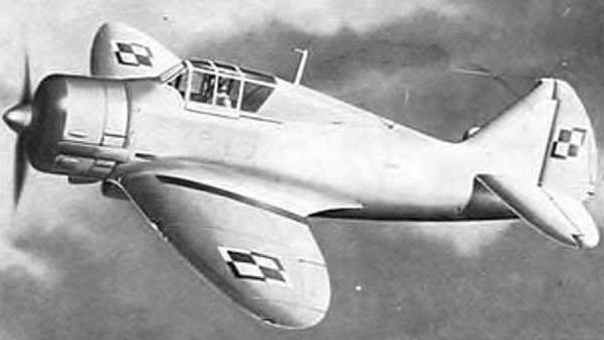
In the field of fighter aircraft Polish engineers embraced many new concepts, initially concentrated on high-wing configurations. However, in the late 1930s, the Polish Air Force decided to pursue a more modern approach by developing a low-wing fighter known as the PZL P.50 Jastrząb (Eng. Hawk). Although a prototype was built, the precise history of the aircraft and the overall project remains unclear, having been largely lost due to the brutal German invasion and the subsequent Soviet occupation.
History
Following the conclusion of the First World War, a new Polish state emerged from the dissolution of the German and Russian empires. After many centuries under foreign rule, the Polish people were finally independent and possessed a state of their own. However, these early years were far from peaceful. Eastern Europe was in chaos, largely due to the ongoing Russian Civil War between the royalist White Army and the communist-led Red Army. Poland’s neighbors were often hostile as well, and numerous skirmishes broke out over disputed territories. By the late 1920s, the situation had somewhat stabilized after Poland successfully repelled the Red Army’s attempt to invade the country. What followed was over a decade of relative calm, but this peace remained uneasy and fragile.
Poland’s political and military leadership understood that another war could erupt in the near future, potentially with any of its neighbors, but especially with Germany or the newly formed Soviet Union. To deter such threats, Poland sought alliances with France and Britain while simultaneously working to build a strong national army. Given Poland’s limited financial resources and industrial capacity, this was a slow process carried out on a relatively small scale. Despite these difficulties, Poland was one of the few countries in Europe that managed to maintain a domestic military industry capable of producing modern armored vehicles and aircraft.
In terms of aviation, the Polish Air Force pursued a series of aircraft designs intended to fulfill various roles, ranging from reconnaissance, bombing, and fighter duties. With regard to fighters, during the 1930s the Polish Air Force primarily focused on high-wing designs. These included the PZL P.7 and PZL P.11. While these aircraft were considered modern and effective designs in the early 1930s, the rapid emergence of new low-wing fighter aircraft across Europe forced Polish Air Force officials to reconsider this approach and begin exploring the development of a modern low-wing fighter.

Polish Search For A New Fighter
By the mid-1930s, the Polish Air Force was considering improvements to its existing pool of fighter aircraft. In particular, interest was growing in new designs such as twin-engine heavy fighters and low-wing single-engine fighters, both of which were gaining popularity among several air forces in Europe.
In particular, the Polish Air Force leadership sought to develop a new low-wing fighter whose primary task was to provide air defense for vital industrial centers and key infrastructure, such as cities and factories. These aircraft were intended to engage enemy fighters in dogfights and claim air superiority, however, once the enemy had been beaten back, the pursuit and interception of bomber aircraft was to be carried out by heavy fighters. This second line of aircraft was also expected to possess sufficient range and firepower to deal effectively with the withdrawing enemy.
In regard to twin-engine heavy fighters, the Polish Air Force was involved in the development of the heavily armed twin-engine PZL.38. While this project initially showed promise, it was eventually abandoned in favor of the more modern PZL.48, a project that was never completed or flight-tested.

Besides the heavy twin-engine aircraft, Polish Air Force officials were also interested in a somewhat cheaper, single-engine, low-wing aircraft that could perform the same role. This requirement would eventually take the form of the experimental PZL.45. There were high expectations for this project, as it represented a modern, all-metal design, albeit with fixed landing gear. Although a working prototype was reportedly close to completion by the late 1930s, interest in the aircraft quickly declined because it relied on imported engines. As a result, the project was abandoned.

For a time, Polish Air Force officials considered using the PZL P.24 high-wing fighter as the basis for a new Polish fighter. While it offered a significant increase in performance, range, and armament compared to earlier models, it was still powered by a French-supplied engine. The Polish Air Force did not wish to rely on foreign components, especially such a vital element as the engine. Despite its overall improvement over the P.11, the P.24 was therefore regarded as only a temporary solution.

The PZL P.50 Project
In 1936, to resolve the dilemma of Poland’s future fighter aircraft, the head of PZL (Państwowe Zakłady Lotnicze – State Aviation Works), Wsiewołod Jakimiuk, and designer of the P.11 fighter, was tasked by the KSUS (Komitet do Spraw Uzbrojenia i Sprzętu – Eng: Armament and Equipment Committee) to begin working on a new modern low-wing fighter.
Instead of further modifying existing aircraft, Jakimiuk advocated the development of a completely new design. In particular, Jakimiuk drew inspiration from the American Seversky Aircraft Corporation and its modern low-wing, all-metal fighter concepts. The core idea behind the new design was to create a basic, modular, airframe that could be progressively upgraded as new technologies and improvements became available, especially regarding engine installation. This proposal was accepted, and work soon began on a new fighter design designated the PZL P.50.
Unfortunately, much of the history of this project remains obscure. Many Polish records were either lost or destroyed during the war, leaving only limited information and a small number of surviving photographs. As a result, the development of the P.50 is only partially documented today.
What is known is that the Instytut Techniki Lotniczej (Eng. Institute of Aeronautical Technology) and the Polish Air Force Command agreed upon the basic operational requirements. Their basic requirements differed from those initially proposed by the KSUS, and unfortunately, the available sources do not provide any further detailed information on these requirements in either case.
With rising tensions in Europe and the growing threat posed by Nazi Germany, Polish officials feared that a new war was imminent. Since the development of a modern fighter typically required several years, there was considerable pressure to accelerate the P.50 program as much as possible. To speed up development, the decision was made to use an already existing engine, with the possibility of upgrading it at a later stage. For this reason, the somewhat weaker, but proven, 840 hp Bristol Mercury VIII radial engine was selected. Early calculations estimated that, even with this engine, the new P.50 fighter could reach speeds of up to 500 km/h.
As work progressed, more detailed construction documentation was completed, and a full-scale mock-up was finished in the autumn of 1937. This was to be followed by the construction of two prototypes. The first, designated P.50/I, was intended to test the installation of a 1,200 hp radial engine. The second prototype, designated P.50/II, was planned to be powered by an even more powerful 1,600 hp engine. These engines were not necessarily intended for mass production, but rather to evaluate the overall performance potential of the P.50 airframe.
Ambitious Production Plans
Early development of this project appeared promising, and as a result, its production order was included in the Polish Army’s military expansion plan, which was intended to be completed by the end of March 1941. This plan projected that the Polish Air Force would need to be organized into fifteen squadrons, each consisting of ten aircraft and equipped with the new low-wing fighter.
The initial order was eventually licensed to include 300 to 500 P.50 fighters to be built domestically. Polish Air Force officials had great confidence in the project to the extent that they paid in advance for the construction of the first 100 aircraft in 1938. It was hoped that the first batch of 50 aircraft would be delivered by September 1939.
In parallel with the P.50 production order, the Polish Air Force also issued a request for 450 Mercury VIII engines. This quantity would cover the 300 aircraft and leave a sufficient number available as spare engines.
Problems on the Horizon
However, problems began to emerge early on. From the start, despite Polish attempts to avoid dependence on foreign companies, this proved impossible. The new fighter was to feature inward-retracting landing gear, but no such design was available in Poland at the time. As a result, the British company Dowty was contracted to design and build the landing gear for the first prototype. This solution was intended to be temporary, as a domestic design was still under development for the production series. By making a deal with an experienced foreign firm, the Polish designers hoped to speed up development.
To their disappointment, however, Dowty required many months to design and deliver the necessary components to Poland. The P.50/I prototype itself was completed in September 1938, but the landing gear arrived much later, preventing flight testing until February 1939. Interestingly, although the P.50/I prototype was built in great secrecy, the Polish authorities presented it to the Italian Foreign Minister, Count Galeazzo Ciano, during his visit in February 1939. Why the Poles chose to do so remains unclear.

The prototype was powered by an 840 hp Mercury VIII engine and was flight-tested by Major Bolesław Orliński. The first test flights proved disappointing. The engine failed to deliver sufficient power, and the aircraft’s overall performance was sluggish. It had poor handling and was unstable at lower speeds, while the maximum speed achieved was only 442 km/h far below the planned 500 km/h.
By April, a number of modifications were carried out in an attempt to improve performance, but with little success. The test pilot reported that the changes did not provide any significant improvement and that a major redesign was clearly necessary. What particularly troubled the Polish designers was the fact that several engines had been tested, yet none achieved their maximum rated performance.
After months of testing, the cause was discovered almost by accident: the air intakes were simply too small. Once the Polish engineers enlarged the air intakes and combined this with structural changes to the wings and tail, the P.50/I was ready to fly again. These modifications finally produced better results, with the aircraft reaching its calculated top speed of 500 km/h during flight tests conducted in August 1939.
At the same time that the P.50/I was undergoing various test flights, work on the P.50/II was already underway. This second prototype differed significantly from the first, most notably in the design of the rear fuselage, which was considerably smaller and more streamlined. The aircraft was intended to incorporate a series of improvements, including armor protection for the pilot’s seat, a main armament of 20 mm cannons (in addition to four 7.7 mm machine guns), and the capacity to carry either an additional 300 kg (660 lb) of fuel or bombs. It was also envisioned to act as a fast ground-attack aircraft.
Although the airframe itself was completed, the Polish designers were forced to wait for the completion of the promised 1,400 hp strong Waran radial engine. With this powerplant, the P.50/II was calculated to reach a maximum speed of up to 560 km/h. However, hopes of completing the prototype were dashed when the engine program suffered major delays and was not expected to be finished before at least mid-1940. Faced with this prolonged setback, the Polish team decided to explore alternative solutions. Ultimately, the decision appears to have been made to equip the aircraft with a 1,375 hp Bristol Hercules engine instead. The P.50/II was expected to be completed sometime after September 1939.
The End of the Project
While work on the first prototype was underway in late 1938, serious disagreements emerged within the top leadership of the Polish Air Force. Two opposing camps clashed bitterly over the future direction of fighter development. General Ludomił Rayski, then Commander of the Polish Air Force, strongly advocated the use of radial engines. His opponent, General Józef Zając, argued instead in favor of liquid-cooled inline engines. At the time, there was a realistic possibility of acquiring such engines from France, something the P.50’s original designer, Wsiewołod Jakimiuk, had already anticipated as early as 1936. Owing to its flexible design, the P.50 could have been adapted to use an inline engine if required. As a result, work began on a revised variant designated P.56 Kania (Eng. Kite), though this project was quickly abandoned.
By late March 1939, General Rayski resigned from his position and was replaced by General Zając. The new commander was particularly hostile toward the P.50 program and moved almost immediately to cancel it. He argued that the P.50 prototype had shown disappointing performance and that the limited available resources would be better invested in other projects.
Both production facilities, W.P.1 (Okęcie) and W.P.2 (Mielec) were soon informed of this decision. At W.P.1, nearly 30 aircraft were already close to completion, and to avoid wasting the work already done, permission was granted to finish them. W.P.2, which had been scheduled to begin production in the spring of 1940, was still in the process of acquiring assembly tooling and equipment and had not yet completed a single airframe. Following the project’s cancellation, all work there was halted.
Despite the official cancellation, improvements in the performance of the P.50/I prototype and the availability of new engines from France, obtained through a large armaments loan, opened the possibility of reviving the program. Consequently, the 30 completed airframes were slated to be fitted with the 870 hp Gnome-Rhône radial engine. Aircraft equipped with this engine received the new designation P.50B, while the earlier variant powered by the Bristol Mercury engine was redesignated P.50A.
Final fate
While there was still some hope of reviving the entire P.50 project with the first P.50B variant nearing completion, the German invasion that began on 1st September 1939 ultimately proved to be the final nail in the coffin. As the war quickly turned against Poland from the very start, a decision was made to evacuate the P.50 airframes that were close to completion. At least five nearly finished airframes were moved from W.P.1 to the motor car factory on Czerniakowska Street during the night of 2–3 September.
The operational P.50/I prototype was scheduled to be evacuated by air, with test pilot Jerzy Widawski assigned to the task. However, when he attempted to take off from a Warsaw airfield on the 5th September, Polish anti-aircraft fire damaged the aircraft, forcing him to make an emergency landing. Its final fate is unclear.
Following the defeat of Poland, the Germans took over what remained of the Polish Air Force’s equipment, including the incomplete P.50 airframes. In general, the Germans showed little interest in Polish aircraft, most of which were either sold off or scrapped. The P.50 airframes remained in Poland until 1940, after which they were transported to Germany. Their ultimate fate is unknown, but they were almost certainly scrapped.

Technical characteristics
The P.50 was a low-wing, single-engine, all-metal fighter. As it did not advance beyond the prototype stage due to the outbreak of the war, and due to the general lack of available information, very little is known about the specifics of its design.

The fuselage consisted of an oval-section monocoque structure covered in Alclad aluminium sheets. The wings were divided into two main sections. The central section extended from the wing roots to the elliptical-shaped outer panels and housed the landing gear units as well as the main armament. This central wing portion transitioned into the elliptical outer sections, which ended in small detachable wingtips. The wing structure consisted of a series of light spars connected into a larger box-shaped unit, with a leading edge at the front and a trailing edge at the rear. The entire wing was then covered with thin sheet metal. The outer wing panels were equipped with automatic leading-edge slats, while split flaps were installed along the span adjacent to the ailerons. The rear tail section was of semi-cantilever design and featured Alclad aluminium covering.

The landing gear was designed by the British Dowty company and retracted inward toward the central wing section. A smaller tailwheel was also fitted and designed to retract into the fuselage.The cockpit featured a rear-sliding canopy. Inside, it was equipped with various control systems and standard equipment, including heating, ventilation, and an oxygen bottle.

The P.50 was designed from the outset to be adaptable to whatever engine was available. Initially, the Polish designers intended to use the 840 hp Mercury III nine-cylinder, air-cooled radial engine. This powerplant was coupled to a three-bladed Hamilton–PZL variable-pitch propeller. However, the performance of this engine was soon judged to be insufficient, and the Poles hoped to replace it with a more powerful engine as such units became available. In practice, little progress was made in this direction. An unspecified internal fuel load provided the aircraft with an operational range of approximately 750 km (466 miles).

The initial armament was intended to consist of four 7.7 mm KM wz.26 machine guns, with a pair mounted in each wing. However, the P.50/I prototype appears to have carried a pair of machine guns mounted in the wings, with a second pair positioned above the engine. The exact reason for this arrangement is unclear, but it is possible that the Polish engineers were experimenting with various ideas and installation positions for the main armament during the aircraft’s development.
Interestingly, Polish designers proposed removing two of the machine guns and using the freed space to carry small fragmentation bombs when required. However, it is unclear whether this concept was ever tested.
As development of the P.50 progressed, Polish engineers also became interested in increasing the aircraft’s offensive capability by installing two 20 mm wz.38 cannons. These were to be mounted in the wing roots. In addition, improved variants were planned to carry a bomb load of up to 300 kg, housed in a bomb rack located beneath the fuselage. Alternatively, this space could be used to carry additional fuel, thereby increasing the aircraft’s operational range.
Prototype and Proposed Versions
- P.50/I – First prototype, powered by an 840 hp Bristol Mercury VIII engine. It was accidentally shot down by the Polish anti-aircraft fire on 5th September 1939.
- P.50/II – Second prototype with an improved design and construction. The aircraft was intended to be fitted with a stronger engine, armament, and better protection, but was never fully completed.
- P.50A – Planned production variant, with an initial production order of 300 aircraft. However, only around 30 airframes, in various stages of construction, were completed before being scrapped by the Germans in 1940.
- P.50B (radial engine) – Intended as a simplified production variant, powered by an 870 hp Gnome-Rhône radial engine. Only one incomplete aircraft had been built by 1 September 1939.
- P.56 – Proposed variant equipped with an inline engine. The project did not progress beyond the design stage.
Conclusion
The P.50 was intended as a potential answer to the Polish Air Force’s need for a new and modern fighter. Based on its projected performance and the improvements made to the prototype, it appears that it could have been a fairly capable aircraft. What ultimately doomed the project, however, was the indecision and poor decision-making of the Polish Air Force authorities, which constantly delayed the actual development of the design.
Instead of committing to a single concept, they attempted to pursue several different solutions simultaneously, none of which progressed beyond the basic drawing or prototype stage. The P.50 went the furthest, yet even it suffered from repeated changes in requirements. Despite the obvious threat posed by Germany, the Polish Air Force hesitated to fully support the project, largely due to a preference for alternative engine choices.
Ultimately, the greatest flaw in the P.50’s development was timing. Even in the best-case scenario, the aircraft would have been produced only in very limited numbers and would have had little real impact on the war with Germany, which began in September 1939.
PZL P.50A (estimated) Specifications |
||
| Wingspans | 9.7 m / 31 ft 10 in | |
| Length | 7.7 m / 25 ft 3 in | |
| Empty Weight | 1.700 kg / 3.747 lbs | |
| Maximum Takeoff Weight | 2.500 kg / 5.511 lbs | |
| Maximum Speed | 500 km/h / mph | |
| Range | 750 km / 466 miles | |
| Crew | 1 pilot | |
| Armament |
|
|
Illustration

Side view of the P.50/I illustrated by Ed Jackson
Credits
- Article written by Marko P.
- Edited by Henry H.
- Illustration by Oussama Mohamed “Godzilla”
Source:
- A. Glass (2001) September War losses 1939 Vol.I, Mirage Hobby
- B. Belcarz and R. Pczkowski (2001) White Eagles, The Aircraft, Men and Operations of the Polish Air Force 1918-1939 Hikoki Publication
- J. B. Cynk (1971), Polish Aircraft 1893-1939, Putnam and Company