USSR (1927-1945)
Passenger aircraft – Approximately 130
In the late 1920s, one of the rising stars among Soviet aviation designers and advocates, Andrei Nikolayevich Tupolev, set his sights on solving a major problem: the country’s lack of a domestically built, modern airliner. Such an aircraft was needed not only for foreign routes but also for transporting important Soviet officials and passengers across the vast expanse of the Soviet Union.
Tupolev spearheaded a team of engineers that, in short order, designed an aircraft designated the ANT-9. It quickly proved to be a well-built machine, free of major issues, robust, and quite modern for its time. Entering service in the early 1930s, it saw extensive use by the Soviets until 1945, when the last remaining aircraft were finally retired.

History
Following the conclusion of the Russian Civil War, the Soviet Union began a slow process of rebuilding in the early 1920s. The industry it had was devastated and required extensive reconstruction. The fledgling aviation sector shared the same fate, as while it had made notable progress before the First World War, the loss of skilled factory workers, designers, and experienced engineers left it hollowed out. It is therefore not surprising that, in the early 1920s, the Soviet Union lacked a modern air fleet, both in the military and civilian sectors.
The situation was particularly dire in the civilian sector, where the country had no modern passenger planes. The only aircraft available for this role were transport variants of the Ilya Muromets bombers, originally developed just before the outbreak of the First World War. By the 1920s, these machines were worn out and clearly obsolete, both in terms of performance and cargo capacity, making a modern replacement desperately needed.

One attempt to fill this role was the KOMTA project. However, due to poor performance, it never advanced beyond the prototype stage. Lacking any viable heavy transport aircraft, the Soviet Union was forced to rely on smaller single-engine planes for most passenger transportation throughout the 1920s.

Andrei Tupolev, already well established in the Soviet aviation industry, was summoned to the Kremlin in October 1927. During the 1920s, the Soviet aviation industry received a boost by signing a cooperation agreement with German firms, notably Junkers, which allowed the production of Junkers aircraft designs. While these first steps were met with some disappointment, they provided equipment and experience to engineers, notably Andrei Tupolev.
Tupolev assured the Soviet aviation authorities that developing a new modern passenger plane was entirely feasible. To accelerate development and reduce costs, he even proposed reusing elements from his projects that were already in development or production. Encouraged by his earlier successes in developing all-metal aircraft, and motivated by the urgent need for a new airliner, the Soviet authorities gave him the green light
By the end of 1927, the Soviet civil air fleet, initially known as Dobroflot (renamed Aeroflot in the early 1930s) issued a more detailed request for such a transport aircraft. The new plane was to be powered by up to three engines, each producing between 250 and 300 hp. It had to feature a fully enclosed cabin for its passengers and crew, a transport capacity of at least eight passengers, and a designated baggage compartment.
To speed up development, Tupolev decided to reuse certain components from one of his earlier projects. Specifically, parts of the wings and tail section, making slight adjustments so they would fit the new design. Progress was steady, and by May 1929, a prototype was ready to be presented. It was unveiled during a military parade in Moscow, where the aircraft received the nickname Krylia Sovetov (Eng. Wings of the Soviets).
The prototype was originally intended to be equipped with more powerful engines, but since none were available at the time, three 230 hp Gnome-Rhône Titan engines were installed as a temporary solution. Interestingly, the aircraft had not yet undergone flight testing when it was displayed in the parade. After the demonstration in Moscow, it was transported to Moscow Central Airfield to begin trials. On the 7th May, 1929, test pilot Mikhail Gromov took the ANT-9 into the air for its maiden flight. The test was a success. Gromov reported that the ANT-9 was pleasant to handle and easy to fly.

Shortly afterward, more flight tests were conducted. These initial flights proved highly successful, with no major difficulties reported. To demonstrate his confidence in the aircraft, Tupolev even flew aboard the ANT-9 with his family.
By June 1929, the prototype underwent further trials, flying to major Soviet cities such as Moscow, Odessa, Sevastopol, and Kyiv. Between 6th and 12th June, the ANT-9 managed to fly a distance of 4,000 km (2,468 miles).Additional testing was conducted by the Soviet Air Force Research Institute (NII-VVS). Although the aircraft was generally well-received, some pilots noted issues with lateral stability. Fortunately, this was an easy flaw to correct, and testing proceeded without major further complications.
Following these trials, the next step was to present the new ANT-9 to the general public in Europe. A major demonstration flight over several European capitals was planned. However, before embarking on such a journey, it was necessary to ensure there were no unforeseen issues. As a final test, a long-distance proving flight was organized from Moscow to Kyiv, then to Odessa, back to Kyiv, and finally returning to Moscow.
The pilot chosen for this mission was Gromov, who had already participated in numerous test flights of the aircraft. He took off from Moscow in July 1929, though the exact date is not specified. From the very beginning, the flight was troubled by poor weather. Heavy rain forced Gromov to fly at an altitude of around 90 m (167 ft). After refueling in Kyiv and continuing the journey, he once again encountered severe weather conditions that forced him to fly at a very low altitude.
During this leg of the trip, Gromov noticed the aircraft was rapidly losing speed, even though the engine showed no signs of malfunction. Puzzled, he was forced to make an emergency landing. Upon inspection, it became clear that the issue lay in the three-bladed propellers. The blades were wooden, and covered in fabric. The heavy rainfall had shredded most of the covering, creating massive drag. This explained the sudden loss of speed.
After examining the damage, Tupolev, who was also on board with several other passengers, attempted a field repair by stripping away the remaining fabric from the propellers. Following discussions between the crew and passengers, it was agreed that some passengers would stay behind, and the aircraft would depart with a reduced fuel load. With these adjustments, Gromov successfully completed the planned return flight from Kiev to Moscow without further difficulties.
European Tour
On July 10th, the ANT-9, began a series of demonstration flights across various European capitals. The first destination was Berlin, which the aircraft reached after a 10-hour flight without major problems.

In the following days, the ANT-9 and its crew visited Paris, Rome, and Marseille. However, while flying toward London, an unexpected accident occurred. The aircraft suddenly went into a sharp dive, surprising pilot Gromov, as such a problem had never been encountered on this aircraft before. After a brief struggle, the crew managed to regain control and land safely.
An inspection revealed that one of the wing inspection hatches had opened mid-flight, causing severe turbulence and forcing the aircraft into a rapid descent. After a quick repair, the ANT-9 was airborne again, but a similar problem occurred once more as it climbed to cruising altitude. Fortunately, Gromov was prepared this time and safely landed the aircraft again.
A more detailed inspection was then ordered. Gromov discovered that a relay tube in the engine compartment had burst. The next day, with the help of equipment found in a nearby village, the crew was able to make a more permanent repair: the tube was welded and the hatch secured in place.
With repairs complete, the ANT-9 continued its journey, flying over the French coast toward England at an altitude of only 20 meters (65 ft). After a short stay in England, the aircraft began the long return flight to the Soviet Union.
The tour concluded on August 8th, 1929, when the ANT-9 arrived home after covering nearly 9,037 km (5,616 miles) at an average speed of 170 km/h (106 mph). Despite the technical difficulties, the entire journey was regarded as a major success by the Soviets.
Name
This aircraft was initially designated as the ANT-9, named after Andrei Nikolayevich Tupolev and following the sequential numbering of his designs. It is interesting to note that, given the high demand and importance of this aircraft, it was rushed through development and placed into production even before the ANT-6 to ANT-8 models were either fully developed or manufactured. Therefore, the designation “number 9” did not necessarily mean it was Tupolev’s ninth project.
PS-9
While the ANT-9 proved to have a good service record, the Soviets were eager from the start to improve it further. In particular, they wanted to see if the number of engines could be reduced from three to two without compromising performance. Another goal was to decrease reliance on foreign engine designs by developing suitable domestic alternatives.
In 1931, attempts were made to replace the ANT-9’s engines with two M-22 radial engines. These were mounted on the wings, while the nose-mounted engine was removed and its opening covered with a cone-shaped fairing. After some redesign work, however, it was decided instead to focus on the more powerful 680 hp M-17 engines.
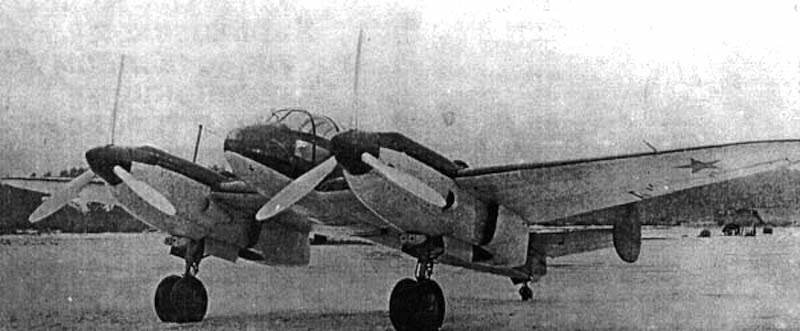
Testing showed that the aircraft’s performance remained largely unchanged. The new variant was essentially a modified ANT-9, with only minor differences such as changes to the forward cockpit windows and a reduced fuel load. Following these tests, a production order was issued. In 1933, some examples received improved 730 hp M-17F engines.
All twin-engine ANT-9s were used primarily for civil transportation services. For this, its name changed to PS-9 (Passazhirski Samolet, meaning Passenger Aircraft). To distinguish between the M-17 and M-17F engines, they were designated as PS-9 2M-17 and PS-9 2M-17F.

Into Production
The main production facility for the ANT-9 was Factory No. 22 in Moscow. Initial plans included the production of 148 aircraft of this type, to be completed by 1934. Production began in 1929 (or in 1930, the sources disagree here), and by the end of 1930, the first batch of 33 aircraft had been delivered. In 1931, another 27 units were built at Factory No.22. At least five additional aircraft were completed at Factory No.31 in Taganrog. In total, 66 ANT-9 aircraft were produced, including the prototype. Slightly more than 60 of the PS-9 variants were built, bringing the total production of both variants to around 130
In Service
The ANT-9 entered service with the Soviet airline Dobrolet in 1931. At the time, it was regarded as one of the most modern transport aircraft in the Soviet Union, and possibly even in Europe. Over the following decade, the ANT-9 saw widespread use, transporting passengers mainly from Moscow across the European region of the Soviet Union, including some international routes. It served in this role until the outbreak of the Second World War in Europe. By then, most ANT-9s were relocated to the Soviet interior, where they remained in service until 1945. Between 1931 and 1945, Soviet airlines operated a total of 62 aircraft of this type. One of the longest-serving examples, serial number L183, logged an impressive 5,205 flight hours.
An unclear number, but at least two, ANT-9s powered by Wright Whirlwind engines were also delivered to Deruluft, an airline jointly operated by Germany and the Soviet Union. The name Deruluft was an abbreviation of Deutsch-Russisch Luftverkehrs A.G. (German-Russian Air Transport Company), which operated between 1922 and 1937. Despite the apocalyptic destruction brought by the war between these two nations, their relations in the 1920s and early 1930s were relatively good. During that time, Germany and the Soviet Union collaborated on several civil and military projects.
Interestingly, at least two ANT-9 aircraft were operated in 1933 as part of a unit known as Agiteskadrilya Maksima Gorkogo (Eng. Maxim Gorky Agitation/Propaganda Squadron). As the name suggests, the purpose of this unit was to organize propaganda operations, spreading information about the Soviet Union’s latest developments across its vast territories.
Unlike today, when information is shared instantly, in the early 1930s the flow of news was often slow and fragmented. Using aircraft to move from place to place over great distances significantly accelerated the process. Once they reached their intended destination, the crews organized propaganda activities such as dropping leaflets, showing films, or even offering flights to workers as a reward for exceptional service.
During their service in this role, the ANT-9s earned the nickname Krokodil (Eng. Crocodile), given by a satirical magazine. In a humorous attempt to match the name, crews decorated the two aircraft with a specially crafted crocodile-shaped nose, complete with a painted grin and teeth. In this distinctive form, both aircraft became widely recognized throughout the Soviet Union during their propaganda missions.

In Combat
The ANT-9 was also employed during the war by the Red Army, although only in limited numbers. All of these were equipped with the 300 hp Wright Whirlwind J-6 engines.
At least one aircraft was assigned to the Turkmen Aviation Group stationed at Kyzyl-Arvat (modern-day Gyzylarbat) in Turkmenistan in 1931. This lone ANT-9 had been transferred from the Ukrainian Military District, where it was employed in support of Soviet anti-insurgency operations against rebellious Turkmen tribes.
Although the single ANT-9 was used primarily for the transportation of military personnel and supplies, it was occasionally employed as an improvised bomber. The crew could carry up to eighty 8 kg AO-8 fragmentation bombs inside the fuselage. When enemy insurgent positions were located, the ANT-9’s crew would simply throw these grenades by hand.
The Soviets ultimately managed to defeat the insurgent fighters of the Turkmen tribes, although some groups continued to resist Soviet rule for many years afterward. The campaign officially ended in November 1931. Following this, the ANT-9 remained in service mainly in transport and reconnaissance roles. At the beginning of 1932, the aircraft became part of the newly formed 95th Separate Transport Squadron.
When the Germans attacked in June 1941, much of the Soviet Air Force was destroyed, leaving the Soviets desperate for any available aircraft they could put into service.
Although not designed as a combat aircraft and lacking any defensive armament, the ANT-9 still found important military roles. It was primarily deployed as a liaison aircraft, transporting vital personnel. In addition, some were allocated for airborne assault training operations. In both roles, the ANT-9 remained in service with the Red Army until the end of the war.

Failed Proposals
ANT-14
Based on the ANT-9, Tupolev attempted to develop an even larger passenger aircraft with a capacity of over 30 seats, intended for long-distance flights. However, the Soviet leadership had no plans for long-range passenger air travel at the time, which led to the cancellation of the project after only a single aircraft was built.

Bomber variant
Using civil aircraft as temporary bombers was not a new concept. This approach sped up development and made use of existing production facilities until purpose-built bombers could be designed and produced. A notable example was the German He 111, which began life as a civil passenger transport, which was secretly designed with a dual purpose military role. The Soviets tried something similar with the ANT-9. Although sources say little about that effort, at least one ANT-9 was tested with bomb racks under the wings and with defensive armament; the project was ultimately dropped around 1932.
Flying ambulance
Another project proposed converting an ANT-9 to serve as a flying ambulance capable of carrying patients and medical personnel. That effort did not progress beyond the prototype stage.
Specification
The ANT-9 was an all-metal passenger aircraft with three engines, providing seating for nine passengers, plus two additional seats for the pilot and mechanic.
The fuselage design featured a square base with rounded top and bottom sections. It was constructed using four reinforced tubular longerons. The idea was to provide as much interior space as possible while maintaining a degree of aerodynamic efficiency. A small escape hatch was also installed on the upper left rear section of the fuselage.
The wing design was essentially a modified version of that used on the ANT-7. The wings consisted of a rectangular center section combined with straight-tapered outer panels. These sections were connected by spars constructed from tubular-shaped booms. The total fuel load, amounting to 972 liters (214 gallons), was stored in the wings, positioned next to the engines.
During its service life, the ANT-9 was fitted with several different types of engines. Initially, it was powered by M-26 engines rated at 300 hp. These were completely exposed, with exhaust collector rings running through parts of the wings and fuselage, and were connected to simple two-blade propellers. The M-26 engines, however, quickly proved to be the ANT-9’s main weakness. While the aircraft’s overall design was considered modern, the engines were mechanically unreliable and failed to deliver the promised 300 hp. Due to poor production quality, their actual output was closer to 240 hp. The Soviets had hoped that the M-26 would prove to be a cheap and dependable option, but its persistent mechanical issues made a more reliable alternative necessary.
With no domestic solution available, the Soviets were forced to turn to foreign designs. Ultimately, the decision was made to equip the ANT-9 with 300 hp Wright Whirlwind J-6 engines. These were paired with three-blade, variable-pitch propellers, and the aircraft’s wingspan was slightly increased to accommodate the change. By 1934, nearly all operational ANT-9s had been re-equipped with these engines. The Wright Whirlwinds proved far more reliable and performed their role without major difficulties.
Most ANT-9 aircraft were equipped with dual controls in the cockpit. However, during passenger flights, the crew usually consisted of just a pilot and a flight mechanic. As the title suggests, the mechanic’s role was to maintain the aircraft in good condition and to assist the pilot when necessary, particularly by monitoring the fuel load during flight.
The passenger cabin accommodated nine seats: four on the left side and five on the right. Each seat had a fairly large celluloid window, positioned under the aircraft’s wings on both sides. Passengers were provided with small sliding curtains. Above the seats were net-type racks for small personal belongings, while at the rear of the cabin, there was a storage area for suitcases, along with a small toilet compartment.
The fixed landing gear consisted of two large wire-spoked wheels with a diameter of 1.1 meters, fitted with 25 cm rubber tires. The landing gear legs were braced with metal struts connecting them to the fuselage and wing section. To soften the impact during landings, each wheel was equipped with shock absorbers. In rough or snowy conditions, particularly common in the vast territories of the Soviet Union, the wheels could be replaced with large skis. Finally, at the rear of the aircraft, a small tailskid was installed.


Conclusion
The ANT-9 was one of the many successful projects of the well-known Soviet designer Andrei Tupolev. It provided the Soviet Union with exactly what it needed at the time: a modern, three-engined passenger aircraft. Its robust and reliable design allowed it to serve for more than a decade without any major incidents, proving itself to be an exceptionally dependable machine.
ANT-9 Specifications |
||
| Wingspans | 23.71 m / 77 ft 9 in | |
| Length | 17 m / 55 ft 9 in | |
| Height | 5 m / 16 ft 4 in | |
| Wing Area | 84 m² / 904 ft² | |
| Engine | Three 300 hp Wright Whirlwind J-6 engines | |
| Empty Weight | 3.353 kg / 7,392 lb | |
| Maximum Takeoff Weight | 5.043 kg / 11,118 lb | |
| Maximum Speed | 209 km/h / 130 mph | |
| Range | 1,000 km / 621 miles | |
| Maximum Service Ceiling | 3,810 m / 12,500 ft | |
| Crew | pilot and mechanic | |
| Armament |
|
|
PS-9 Specifications |
||
| Wingspans | 23.71 m / 77 ft 9 in | |
| Length | 17 m / 55 ft 9 in | |
| Height | 5 m / 16 ft 4 in | |
| Wing Area | 84 m² / 904 ft² | |
| Engine | Two M-17 | |
| Empty Weight | 4,420 kg / 9,744 lb | |
| Maximum Takeoff Weight | 6,200 kg / 13,668 lb | |
| Maximum Speed | 215 km/h / 134 mph | |
| Cruising Speed | 180 km / 112 mph | |
| Range | 700 km / 435 miles | |
| Maximum Service Ceiling | 5.100 m / 16,730 ft | |
| Crew | pilot and mechanic | |
| Armament |
|
|
Illustration

Credits
- Article written by Marko P.
- Edited by Henry H.
- Illustration by Oussama Mohamed “Godzilla”
Sources:
- D.Nešić. (2008) Naoružanje Drugog Svetsko Rata-SSSR. Beograd
- Y. Gordon and V. Rigmant (2005) OKB Tupolev, Midland
- P. Duffy and A. Kandalov (1996) Tupolev The Man and His Aircraft, SAE International
- B. Gunston (1996) Tupolev Aircraft Since 1922, Naval Institute Press
- V. Kotelnikov (2024) Soviet Military Aviation in Central Asia 1917-1941, Helion & Company Limited
- https://www.aviastar.org/air/russia/ant-9.php